


If you want all the amenities of a European nation mixed with the rich culture of Southeast Asia, all for a manageable price tag, Thailand is the obvious choice for your new life abroad.
I was a true roaming digital nomad for 7 years. I hefted around my pack, bouncing from country to country, never staying longer than a typical tourist visa would allow. I had been to Thailand plenty of times. First, as an ultra-budget backpacker, then later as a more "culture and foodie-focused" kind of adventurer.
Part of the allure was the generous tourist visa, of course, but with each visit, Thailand became better illuminated. It wasn't just a party place or a first-time traveler destination. There is so much more about this incredible country than meets the eye.
I've been living in Thailand for 1 year now on their new Digital Nomads Visa. Since settling into my apartment smack-dab in the center of Bangkok, I've rarely seen another tourist. Okay, I see them, but not nearly as much as you might think. The parts of Thailand that tourists on a short-term stay spend their time in are just so dramatically different than where the residents go.
With affordable housing, an endless supply of world-class food, an abundance of coworking spaces, lovely tropical weather, great healthcare, a welcoming community, and highly developed infrastructure with supercharged internet —it's a one-stop destination.
Add to that, you have the choice between beachy island-living, trendy mountain towns, or bustling Bangkok life. You can live right in the heart of Asia, perfectly poised for further exploration, whether it's within Thailand's borders or further afield.
Here are all the details on how to score the Destination Thailand Visa for your next stint abroad.
Short On Time? Here's The Cheat Sheet
Thailand launched the DTV visa for digital nomads in July 2024.
DTV visa holders can live in Thailand for 5 years. Each stay is limited to 180 days.
The eligibility requirements to apply include:
- Valid passport for 6 months.
- You must be 20 years old or older (unless applying as a dependent).
- Pay the government visa fee. Each Royal Thai embassy or consulate sets its own, so it tracks where you apply, not what passport you hold: US$400 in Washington, D.C., US$340 in Ho Chi Minh City, ฿10,000 in Vientiane. Check the mission you plan to apply at.
- You work remotely OR are enrolled in an approved "soft power" Thai cultural activity.
- Maintain 500,000 Thai Baht in a bank account for at least 3 months.
- Must not be currently in Thailand during the application process.


How Easy Is It To Live in Thailand as a Digital Nomad?
Before we dip into the nitty-gritty details of the DTV, let's talk about integration. How easy is it to live in Thailand as an immigrant?
I've found it exceptionally easy. From the internet set-up in your apartment to meeting new friends in a Muay Thai class, Thailand is easier than most places around the globe to establish yourself. Locals are welcoming and kind while expats are a diverse bunch with a wide variety of interests that pretty much ensure you'll be able to cultivate community.
Why is Thailand's "Digital Nomad Visa" Unique?

The Destination Thailand Visa is unique in that there are three ways to get approved for the five-year visa status.
- You are a remote worker or freelancer working online.
- You sign on for a "soft power" activity. The most popular are Muay Thai or Thai Cooking Classes.
- You are a spouse or dependent of a current DTV holder.
This means that while digital nomads are obviously welcome, those with financial stability can also quit their jobs entirely and spend a year learning a cultural activity (through an approved organization) to earn their 5-year visa.
Don't qualify for the digital nomad visa? Consider teaching English in Thailand instead.
Introducing The Destination Thailand Visa or DTV

Officially branded as a "Workcation" Visa, Thailand wants to boost tourism while also encouraging people to dive deep into the unique local culture. This is excellent for online workers and digital nomads, as well as those seeking a long career break.
This is because it doesn't require you to maintain employment, assuming you've got enough in your bank account, that is.
The Thailand digital nomad visa is unique in that it offers a lengthy stay, but functions more like a multiple-entry tourist visa than a typical digital nomad visa.
Visa Requirements
These are the visa requirements for the DTV. Each Royal Thai mission publishes its own document list, so confirm yours with the embassy or consulate handling your application. The Royal Thai Embassy in Washington, D.C. publishes its list in full.
- You have a passport valid for another 6 months from an approved country.
- You are not currently in Thailand.
- Bank account in your name with a balance of 500,000 Thai Baht maintained for three months.
- Proof of income for the last 6 months. (This can be a former job)
- Route for Digital Professionals: You are a remote worker who earns money online and is not employed by a Thai company.
OR - Soft Power Route: You have signed up (and paid for) an approved "soft power" course to enhance your understanding of the Thai culture. This means Muay Thai, Cooking, or another Thai Art.
If you are going the remote employment route, you can be a freelancer, self-employed with business ownership, or a remote worker with an employment contract from a foreign company. The biggest hurdle is showing how you actually make money online, and that it isn't from any Thai companies. This is the route I chose. I am a freelance writer and was able to show I have regular income from several clients by submitting my emails and bank statements.
If you are going the soft power route, you must first enroll in whatever cultural course you'll plan to attend. After you sign up for the classes, the gym or instructor will provide you with the letter of acceptance that you'll need to become DTV approved, rather than providing a professional portfolio and proof of income.
Keep in mind if you have prior visa violations in Thailand, it may affect your ability to obtain a long-term visa and rental property income cannot count as remote work income.
How to Apply
While there is no monthly income requirement, no mandatory health insurance policy, and no prerequisite Thai bank account for this visa, you still have to submit a few documents to obtain the digital nomad visa.
- You must prove your current location. This is most often done by submitting a copy of your driver's license with your home country address.
- You must provide at least three months (ideally six) of bank statements for a bank account in your name, maintaining a balance of 500,000 THB (or currency equivalent).
- To prove you have been receiving an income, you'll need to include one of the following: pay stubs, freelance invoices, or other deposits for the last six consecutive months.
- To prove you are a remote worker, you need to either show an employment contract for a foreign company, a freelance portfolio (showcase of your photography, writing, etc), or a CV/resume. You may also need to show examples of your work, client contracts, and client invoices.
While this all can sound a little complicated, Thailand is most concerned that you have the correct amount of money in your bank account and the ability to continue earning online once in the country.
For example, to prove I'm a remote worker who has been receiving an income, I would screenshot some of my work published online or an active portfolio of my work, include several freelance invoices sent to clients, 6 months of bank statements with client payments highlighted, and screenshots of emails with clients using my services (or official contracts we signed). This is more than sufficient to prove I qualify for this visa category.
If you cannot provide this Digital Nomad proof of income, you'll need to apply with "soft power" or other visas instead.
Do I Need a Visa Agent?
Very zealous applicants who don't fear bureaucracy occasionally go to the Thai Embassy themselves with all the necessary paperwork, but considering the hefty cost of a rejection, 99% of all Destination Thailand Visa DTV applicants apply through a visa agent or company.
Thailand has no shortage of visa agents lurking in WhatsApp and Facebook groups, many of which are of dubious quality. Issa Compass, on the other hand, is a super helpful, highly recommended local agency with its own easy-to-use app that lets you upload documents (and have them pre-screened by professionals) with ease. This is the company I used to get my DTV. Not only was the process super easy, well-documented, and straightforward, but I received my DTV within 48 hours of submission. This can take up to 6 weeks with some agencies.
Issa Compass also lets you easily track your 90-day and 180-day check-ins via their app if you plan to stay within Thailand's borders for that long at one time.
Where Can I Apply From?
This is one of the most confusing aspects of the DTV for digital nomads on the move. While most applicants apply for the DTV from their home country, sometimes, you're already on your digital nomad journey abroad. If this is the case, you don't necessarily have to fly all the way home when you apply.
Vietnam, Laos, and Indonesia allow applicants to apply from within their country, even with a U.S. passport or as an EU citizen. It does change the visa application fee, though, because each mission sets its own: the same passport pays US$340 at the Royal Thai Consulate-General in Ho Chi Minh City and ฿10,000 in Vientiane, against US$400 in Washington, D.C.
Check-In's
While the Thailand digital nomad visa technically lets you reside in Thailand for 5 years, it also requires 90-day "check-ins" and for you to leave the country entirely once every 180 days.
This only applies to people who are continuously staying in Thailand. The check-in time resets when you leave the country.
At a 90-day check-in, you'll need to complete one form: TM.47. (TM.30 is a separate notification of where you are staying, filed by whoever owns, manages or is in possession of the place: your landlord, your hotel, your condo office, or you yourself. Keep a copy of its receipt, because immigration asks for it when you apply to extend.) You'll also present your passport with your most recent entry stamp and your existing visa. This check-in is crucial: you can report from 15 days before the due date until 7 days after it, and reporting later than that costs a ฿2,000 fine, rising to at least ฿4,000 plus up to ฿200 a day if immigration catches the lapse before you report it.
The easiest way to get around this added bureaucracy is to leave the country every 3 months (before your 90-day mark). In that case, you don't need to do any kind of check-ins for the duration of your 5-year DTV.
Border Runs
Thailand shares a land border with Myanmar, Laos, Cambodia, and Malaysia. In practice, it is super common for DTV holders to simply bus across the border for a few hours and try to re-enter Thailand the same day after a 180-day stay. Legally, this is dubious. In late 2025, Thailand began cracking down on "border runs" to encourage people to comply with the spirit of their generous visas. Re-entry will be subject to the border agent's mood. Check the crossing itself before you commit to one. As of August 2026 the UK Foreign Office reports that land borders between Thailand and Cambodia are suspended, with unexploded landmines in that border area, and advises against all but essential travel to the far-southern provinces along the Malaysian border and on the Hat Yai to Padang Besar train line. It also warns that not every Lao crossing is open to foreign nationals and that you may need a Lao visa in advance, and that the security situation on the Myanmar side is unpredictable.
How do you navigate this 180-day departure if you aren't interested in taking an actual trip? You can exit from any international airport (even if it's only a short day trip) rather than a land border. Or you can apply in person at a Thai immigration office for a one-time 180-day extension, on form TM.7, for a government fee of ฿1,900. Go to the immigration office for the province you're living in, which in Bangkok is Immigration Division 1 at the Government Complex on Chaeng Wattana Road. Embassies and consulates issue the visa but do not handle extensions. This would allow you to be in Thailand for just short of 1 year without ever leaving the country.
But really, it's a great excuse to take a week-long vacation to another country in Southeast Asia.
Do I Have to Pay Thai Taxes?
It comes down to one number: spend 180+ days in Thailand in a calendar year and you become a Thai tax resident.
If you use Thailand as a home base and spend less than 180 days a year here, you're not a tax resident and owe the Thai government nothing on your foreign income.
If you cross 180 days in a calendar year, your foreign income can become taxable — and this is the part that changed recently. Under a 2024 Revenue Department reinterpretation, foreign income earned in 2024 or later is taxable when you remit it to Thailand, whether in the year you earn it or any later year — the old "wait a year and bring it in tax-free" loophole is closed for post-2024 earnings. (One moving piece: as of mid-2026 a relaxation of this remittance rule has been proposed but not enacted, so treat the closed-loophole version as the current state.) Thailand has 60+ double-tax treaties, but relief isn't automatic. This is genuinely individual — confirm with a Thailand-qualified tax professional before relying on any of it, especially as a US citizen.
Best Places to Live in Thailand as a Digital Nomad
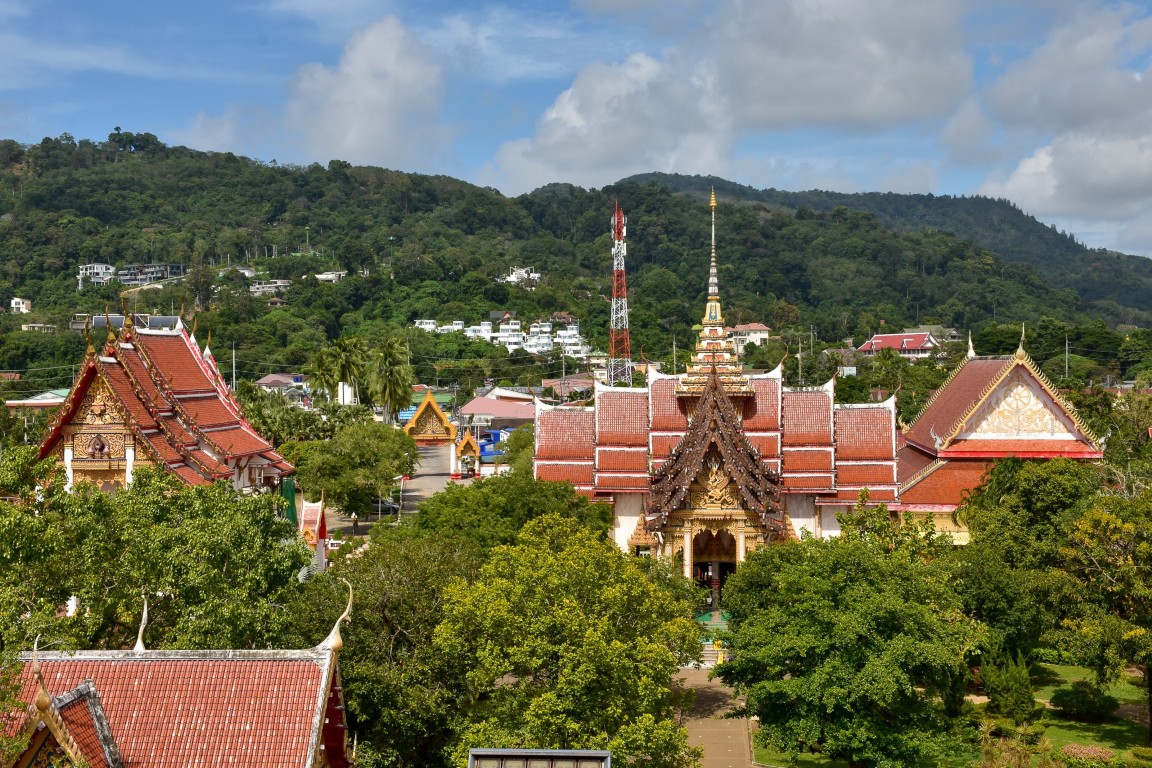
This entirely depends on your own individual needs for a home base. As an avid traveler looking to build community and enjoy the fast-paced city life, I chose Bangkok. While I often pine for the nature and serenity of the islands or the northern provinces, I have no regrets. Instead, I opt for lengthy staycations in those places while taking advantage of Bangkok's international airports.
The most popular digital-nomad hot spots are:
- Bangkok: For those looking to meet lots of fellow expats, live in one of the most vibrant cities in the world, and have access to any amenity you could dream of. Perfect for those who know they will often be traveling internationally.
- Chiang Mai: One of the most budget-friendly destinations to work remotely, with insanely good food, lots of cultural activities, and a very active expat community. An excellent balance between nature and easy access.
- Phuket: This island-adjacent community has been steadily growing in popularity among remote workers. You have all the amenities of a big city (including an international airport) while still giving island vibes.
- Koh Samui. Pure island bliss with lots of remote work nomads who stay for extended periods.
Don't miss this article for more details on the best places to live in Thailand.
Want the numbers behind the visa? Our cost-of-living teardown newsletter breaks down what a month in Thailand actually costs: real rent by neighborhood, the DTV vs LTR visa math, and the 180-day tax trap in full. Start with the free preview, then the cost breakdown and the visa-and-tax decision layer. Chiang Mai is next in the series.
Things to Know Before Moving to Thailand
When it comes to digital nomads in Thailand, there are many of them. It's a country with vibrant nightlife, an insanely good foodie culture, and a welcoming atmosphere. Here are a few things to keep in mind if you're considering the move.
- Thai people are kind and welcoming. Rather than take advantage of this generous community, be sure to give back. This means supporting local businesses.
- While many people in Thailand speak English, it's not a given. It can be helpful to learn some Thai. There are many places you can take Thai lessons.
- Thailand (for the most part) is ultra-modern. You won't have to worry about a poor internet connection ever again.
- While Thailand is a very affordable country, you probably aren't going to be able to get by on $500/month in a major city without some serious sacrifices.
Thailand offers something for every kind of digital nomad. There's this false perception that it's only for people who love to party or young backpackers on a super tight budget, but Thailand has depth and appeals to all kinds of people.
Start Your Workcation With a Thailand Digital Nomad Visa Today!
In as few as 10 days, you can be fully processed, approved, and ready to move to Thailand!
There's no reason to wait. While many destinations are pushing ahead with digital nomad visas and long -term stays, other countries just don't have the breadth of culture, food, community, and incredible nature that Thailand offers.
You can also look into other non-immigrant visas like the LTR visa for long-term investors, the Thai Elite Visa if you're wealthy and want to bypass all the paperwork, or simply continue to take advantage of Thailand's most popular visa, the tourist visa, which allows 60-day stays for most travelers.


.png)
.png)


