


The Decision to Bring Pets
Like most zilennials, my pets are like my children. My very own flesh and blood. I couldn't even fathom leaving them behind when my husband and I started exploring a move abroad to Spain.
But... I didn't love the pet transport options either.
In the US, we lived in a large apartment, we had a car and could take our Golden Charlie on adventures, and we had family nearby to take care of the pets when we were out of town. We would be giving up all of these comforts with a move abroad, and this proved to be the hardest part about making the decision to move to Spain.
It had always been a dream of ours to move to Spain, and after reading countless blogs and articles about pet relocation, we committed to making it work. We weren't sure how exactly it would happen, but hearing the stories of other people who had moved their animals abroad successfully gave us the confidence to go for it. In this article, I'll deliver everything I learned along the way to help you make an informed move for yourself.
Short on time? Here's the cheat sheet:
✈️ Most large dogs fly cargo, not cabin — and that's okay. Book an airline that takes pet travel seriously (Lufthansa, KLM), and avoid the June–August heat embargoes on flights to Spain.
📋 Spain requires a microchip and rabies vaccine (with a 21-day wait if it's the first one, given after the chip), plus an APHIS-endorsed EU health certificate signed no more than 10 days before you fly.
🐕 Check whether your breed needs a PPP licence — and note that since Spain's 2023 Animal Welfare Law, civil-liability insurance is mandatory for every dog, not just PPP-listed breeds.
🏠 Line up a pet-friendly stay for your first month so you can apartment-hunt in person before signing a lease.
🐾 Planning trips once you're settled? A membership like TrustedHousesitters lets a vetted sitter stay with your pets in your own home while you're away.
🛜 Land connected with an eSIM so you can navigate Madrid from the moment you arrive.
🤕 Sort your own coverage too — SafetyWing offers health insurance built for expats and long-term movers.


The Biggest Question: Cabin vs. Cargo
The first place every pet owner starts with their research is determining if they can fly their pet in cabin, or if they have to fly in cargo. Usually, cargo is a deal breaker, and I get it. I moved my cat and dog in cargo in 2024, and we had a safe and smooth travel experience.
If you're still trying to grasp your options, there are a few ways to move your pet across the Atlantic:
Flying in cabin
This is typically only reserved for service animals or small cat or dog breeds that can fit comfortably under your seat.
For a small pet to fly in cabin, the carrier plus the pet must weigh less than 8kg (or about 17lbs). They also need to be able to stand up, turn around, and lie down comfortably in their carrier. Small pets do have to be registered as part of your flight booking process, since airlines usually only allow 2-5 pets per flight.
Under the Americans With Disabilities Act (ADA), a dog can be recognized as a service animal without any registration or certification if you have a qualifying disability, and if the dog is task-trained to perform a task that you cannot do yourself.
When flying with a service animal, you must notify the airline at least 48 hours before the flight, and you may be asked to provide some documentation. This usually includes a US DOT form attesting to the dog's health and training, and if the flight is over 8 hours, you may also have to provide confirmation that your dog will not relieve himself on the flight.
Chartered flight
It's becoming more common to pool your money with other large dog owners flying a similar route to charter a private flight. It sounds crazy expensive, but if you plan to hire a relocation service, the cost may actually be the same. You can find this option through Facebook groups (i.e. Chartered Air Travel With Pets), or reserve through BarkAir, which is the same concept.
In this case, you would still organize all the immigration paperwork and take the dog through customs yourself, but you would have a much more comfortable flight that allows for your dog to stay by your side in the cabin. Your dog would need to do well with other dogs in a tight space to be comfortable with this option.
Queen Mary 2 Ship
One of the more interesting options is the Queen Mary 2 cruise ship which departs from New York and arrives in Southampton, UK, and offers luxurious pet kennels so you can take your large pets with you for the voyage. Passenger fare for a weeklong trip is about $1,000 USD per person depending on the exact trip/season, and kennels run between $800-$1,500 USD.
While this seems like a cool option, the UK has stricter rules about bringing pets into the country, which means a more labor intensive process if you plan to arrive in the UK and bring your dog into Spain either through plane or train travel.
It's a cool option, but has plenty of logistical challenges unless you're moving on that exact route with your pet.
Cargo
For most large dog owners, cargo is the only feasible option.
If you talk to people about flying dogs in cargo, you'll get negative reactions and hear about the few horror stories circulating on the internet. But my experience is the complete opposite, and so is the experience of the people I've met abroad who have done the same with their pets.
The truth is, it's not ideal and it may not be perfectly comfortable for your pets. But if you book with an airline like Lufthansa or KLM that take pet travel extremely seriously, you'll know that they're doing everything in their power to ensure a smooth flight for your pets.
If you plan to fly your pet in cargo, they will likely have to take a different plane or route than you. This is because excess baggage is different than cargo hold, and typically pets travel on dedicated cargo planes. This can present a logistical challenge if you're moving abroad by yourself.
Note that if you're flying with your pets in cargo to Spain, there are embargoes during the summer when temperatures surge, so it's best to avoid June-August for your move. This is to protect your pet and ensure a comfortable and safe flight.
Pre-Move Preparation
When we were planning our move abroad, we researched all of the options above, and ultimately decided to hire professional support to move our pets in cargo.
After looking at options for our route from Chicago to Madrid and weighing the logistical complexities, we decided to save the stress and hire a professional. This allowed us to be there when the pets left for their travel, and arrive in Madrid before having them transported straight to our doorstep.
We spoke to two viable pet relocation companies, and ultimately decided to go with Pet Relocation. They were more experienced, organized, and had more positive reviews than other options we were seeing.
Pet Relocation offered a door-to-door package where they picked our pets up at our house and dropped them off with us at our Airbnb in Madrid. They only book flights with airlines known for incredible levels of care with pet handling, and scheduled a layover at one of the world's best airport pet boarding facilities to ensure a high level of care for our pets.
If you decide to hire support, just note that this is not an area that you want to cheap out on. Unfortunately it is very expensive, especially with larger pets, but with payment installments and flexible packages, Pet Relocation was very accommodating. You should also be very careful when choosing a pet relocation company, as there are scams online that you need to be cautious of. Always look for reviews, testimonials, and meet with the team before you pay for any of their services.
Before you book your pet travel, either alone or with professional help, confirm that your breed is not on a PPP or dangerous breed list. While Spain does not have a banned breeds list, they do have a PPP list that requires a separate license. Double-check if your breed is on this list before moving to Spain to ensure you comply with all requirements.
After you've done your due diligence and decided on whether you'll be moving your pet by yourself or with professional help, here are the steps you need to take.
Measure Your Pet and Buy a Crate
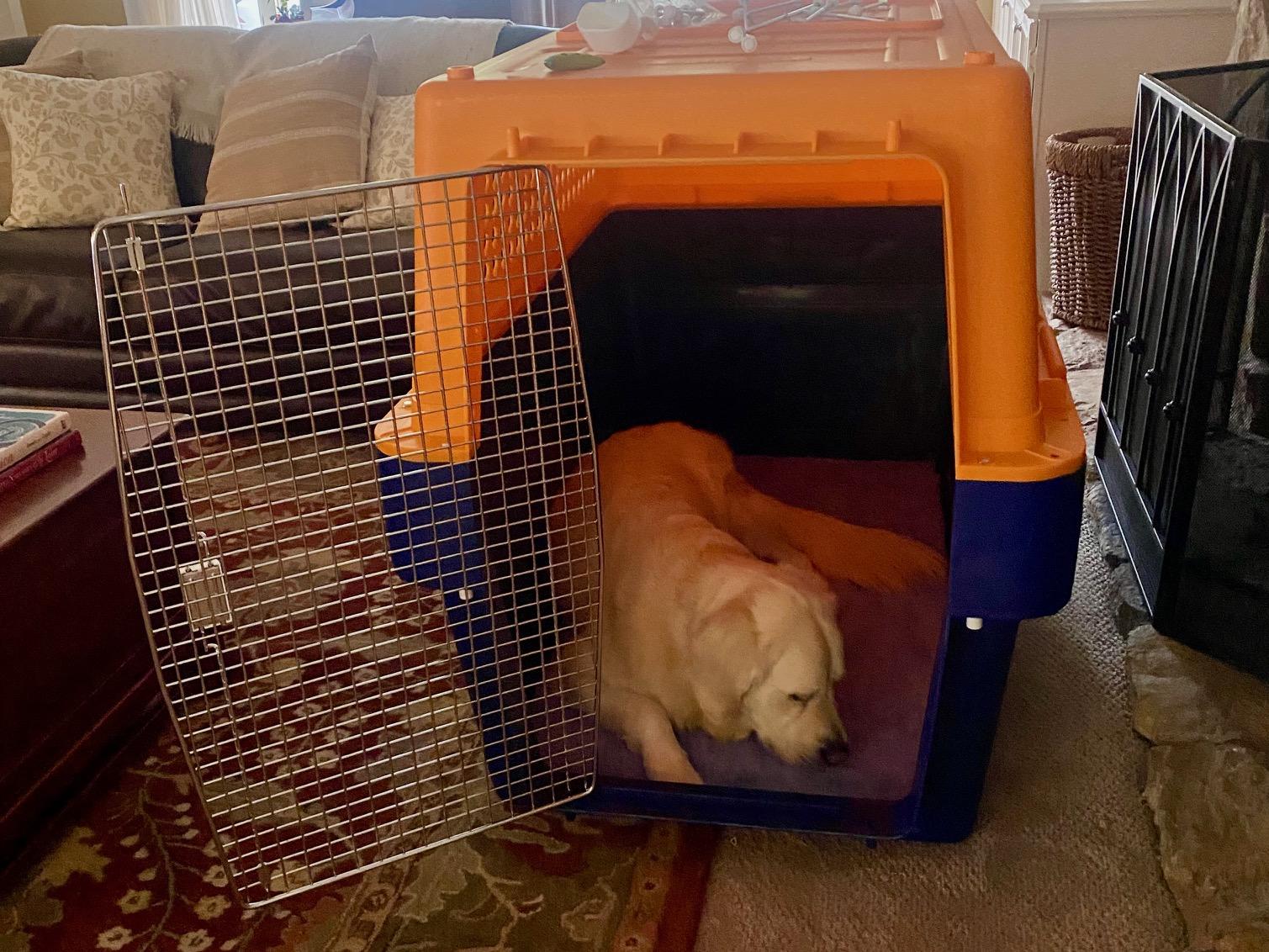
If you're traveling with your pet in cargo, the most important step is to measure your pet correctly and get the correct size travel crate. If you do not have an appropriately sized or airline-approved crate, your pet will not be able to fly.
To measure your pets correctly, I recommend watching this YouTube video, which aligns exactly with the information we received from the professional pet relocators.
If you're traveling from the US, these crates can be pretty expensive depending on the size of your dog. We paid about $1,000 USD for our PP100-sized crate on Amazon. If you have lots of time before your move, I recommend shopping for your crate secondhand on Facebook Marketplace or eBay for a lower price.
You should purchase the crate at least 4 months out to give your pet plenty of time to get used to it. Even though Charlie was crate trained, I retrained him specifically to spend time in and feel comfortable with this travel crate. That included giving him treats in the crate, getting my scent in the crate, and keeping some of his favorite toys in there during the day.
Confirm Rabies & Microchip Requirements
Spain requires that all pets have their rabies vaccine and microchip before entering the country. Make sure your pet is up-to-date on its rabies vaccine at least 3 months prior to travel to be safe.
If this will be your pet's first rabies vaccine, Spain requires a 21-day period before your pet is eligible for travel. It's important to note that if the rabies vaccine was administered before the microchip, the vaccination doesn't count. The 21-day clock restarts from the date of the microchip.
Solicit a bilingual EU Health Certificate
This step covers requesting the bilingual EU Health Certificate itself. Your USDA-accredited vet should request the bilingual template from APHIS before issuing the certificate by emailing LAIE@usda.gov.
If you hire a pet relocation company, they should do this for you. If you're planning your pet's travel by yourself, you should do this about 6 to 8 weeks before travel. This is an additional step required for Spain, and soliciting it late will compress the health certificate endorsement window down the line.
Get your APHIS EU Health Certificate Endorsed at the Vet
The final step in the preparation process is to schedule a vet appointment with your USDA-accredited vet, and submit the EU Health Certificate to APHIS for endorsement. This endorsement needs to be done no more than 10 days before you travel.
When we showed up to this final vet appointment with Charlie and Spud, they checked to ensure our pets were healthy enough to travel, signed the health certificate, and the vet mailed the documents to APHIS for its final endorsement. You need to wait until APHIS mails the endorsed document back to you until you're able to fly with your pet. We also brought a prepaid return envelope to the vet appointment to facilitate this process.
Note that APHIS is usually very quick, and we received the endorsed certificate within 48 hours of our appointment. Ultimately, the exact turnaround time will depend on where the closest APHIS office is to you. I recommend scheduling the vet appointment at the beginning of the 10 day window just to be safe.
After you've completed these steps, your pets are all ready to go. Note that you (or a designated representative) must travel within 5 days of your pets arrival in Spain.
Pet import rules, health certificate requirements, and airline policies change regularly. The information in this section reflects requirements as of June 2026. Always verify current rules with USDA APHIS (aphis.usda.gov), Spain's Ministry of Agriculture (mapa.gob.es), and your chosen airline before booking.

Arrival at Barajas Airport
There is no joy like being reunited with your pet(s) after a long journey. Since we hired professional support with door-to-door service, Charlie and Spud arrived at our doorstep a few hours after we landed in Spain. I cried with relief that our pets were healthy, happy, and ready to hit the ground running in Spain!
If you do not plan to hire a relocation service, you'll have to take your pets through customs yourself. When you land in Madrid, you must go to the customs area to declare your pet and present their paperwork (rabies, microchip, and EU health certificate).
Although it typically takes awhile to process, this step should be smooth as long as you were thorough with your paperwork and have everything ready to go upon arrival in Spain.
Settling Into Life in Madrid With Pets
One of my biggest fears was how Charlie would adapt to life in Spain after the move. But I'll never forget the very first day that he arrived in Spain, he had more energy, excitement, and his usual happy personality right from the jump. Even though we were jetlagged from the trip, we spent the whole first day with Charlie at the park, exploring and getting some of his post-travel energy out.
But day-to-day life in Spain looks a little different in a few key ways.
First, it can be hard to find a pet-friendly apartment in Madrid. The rental market is extremely competitive, and if you have a large dog in particular, landlords may not want to rent to you. When you first move abroad, I recommend getting an Airbnb for one month and searching for apartments in person. Don't offer up any info about your pet unless they explicitly ask! (You can filter for pet-friendly stays in Madrid on Booking to line up that first month before you arrive.)
Despite the competitive market, I was able to get a furnished, pet-friendly apartment in La Latina within my first two weeks in Spain. It isn't impossible, and you will eventually find a good fit. (For the bigger picture of settling into the city beyond the pet side, see our guide to living in Madrid.)
Second, most dogs in Madrid walk the city off-leash. It's amazing to see how well behaved they are in general, but if your dog is reactive, you may want to train it in advance so it doesn't get scared by off-leash dogs walking up to it.
Third, madrileños loooove their furry friends. Charlie gained 10 lbs when we first moved here due to all the treats our local coffee shops and restaurants gave him! Aside from all the treats, pets are welcome almost anywhere you go in the city. Even in the heart of the city, there are plenty of dog parks where pups are running free and enjoying their dedicated piece of the city.

Fourth, summers in Madrid are no joke. It regularly reaches above 100°F, and it's hot enough to burn their paws on the asphalt. To combat this, I recommend taking your dog out early in the morning and late at night, and doing your best to avoid peak hours. I see some people with rubber boots to protect their dog's feet when it gets hot enough.
Lastly, it's pretty easy to navigate the city with pets. Dogs are allowed on the metro if they're wearing a muzzle and you avoid rush hours during weekdays (7:30-9, 14:00-16:00, and 18:00-20:00). If you ride on the metro with your dog, you must ride on the last train car only.
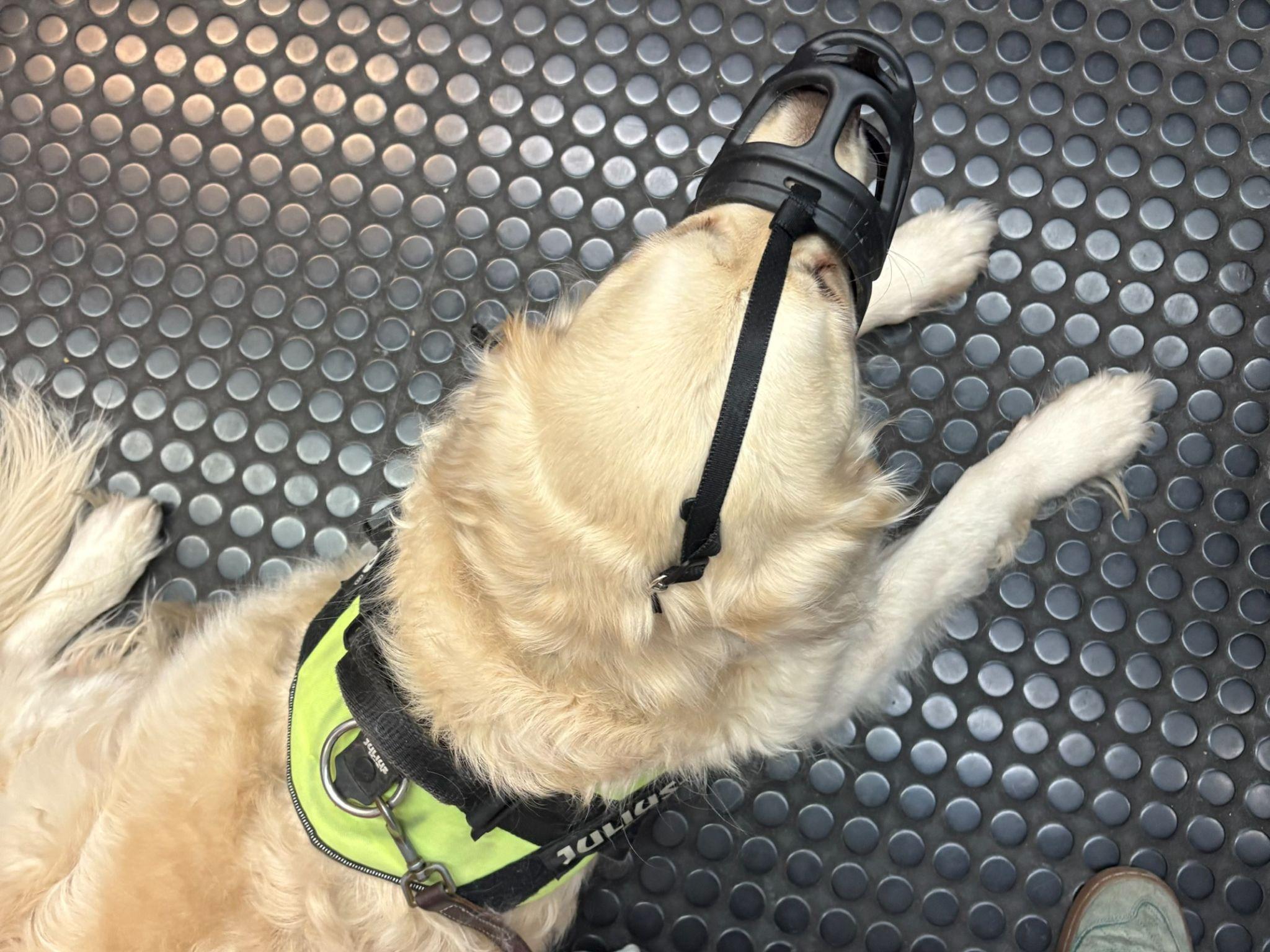
We've even taken Charlie on longer train rides between Madrid and Málaga, where similar rules apply. If you're traveling Spain with a large dog, you have to look for routes and train cars that are designated as pet-friendly, and book their seat in advance. Get to the train station at least an hour early to check them in before the trip! Dogs must wear a muzzle when moving about the train station, but you can take it off once you're on the train.
Cost of Life With Pets in Madrid
Compared to the US, I've found the cost of life with pets to be less expensive. Between vet visits, food, and insurance, we spend less overall for two pets than we used to in the US.
Quick story time: last summer, Charlie ate an entire dog toy and needed surgery on a Spanish holiday. The cost of the surgery, a 3 night stay in the pet hospital, and the holiday fee for bringing the vet in totaled to about $3,000. I know friends whose pets had the same surgery in the US, and they paid $10,000!
Despite the occasional unexpected bill, day-to-day costs are manageable. Here's a quick breakdown of how much it costs to have a dog in Spain. One legal note worth flagging: since Spain's 2023 Animal Welfare Law, civil-liability insurance is mandatory for all dogs — every breed, not just PPP-listed ones — so the pet insurance in the table below isn't just smart, it's legally required.
| Item | Cost |
|---|---|
| 14kg Bag of Dog Food (Purina Pro Plan) | €56 |
| 4kg Bag of Cat Food (Royal Canin) | €53 |
| 10L Bag of Cat Litter | €7 |
| Routine Vet Visit | €40-60 |
| Monthly Pet Insurance | €12-24 |
| Overnight Pet Sitter | €20-25 |
| Doggy Daycare (Daypass) | €15-25 |
| Grooming | €30-50 |
| Large Dog Train Ticket | €35-40 |
One more thing to note: when I lived in the US, even if I had a question and wanted the vet to see Charlie briefly, I was still charged at least $50. In Spain, we know our vet, and if we pop in for a quick question or just have them answer a few questions, they will not charge us a fee. We are only charged if we receive a vaccine, medication, or some kind of product that we need to purchase.

What You Need to Know Before You Move
If I could go back in time and talk to myself before the move knowing what I know now about pet relocation, I would not have stressed so much about safety. Before the move, I didn't know anyone who had gone through this before, and it all felt so scary and uncertain. Now, I've met so many other immigrants and expats who have moved with their dog, and I think we underestimate how resilient our pets really are.
It can seem overwhelming to go through the process yourself, but once you arrive in Europe, your pet will have a great quality of life. Now that we live in Spain, Charlie gets more socialization, more attention, and more time outside with me (even if just coming with me to run my errands) than he did in the US. I bring Charlie with me when I go out to dinner, work from a coffee shop, or even go to the print shop or post office to run errands.
While life does look different, we haven't sacrificed his quality of life in the process.
Spud's Tale: What To Know About Cats
We can't forget about Spud! Moving with our small cat Spud seemed like a piece of cake compared to moving our big Charlie.
To simplify the process and keep our bonded pets together, we decided to fly her in cargo with Charlie instead of in the cabin with us. This made more sense logistically (as we had plenty of luggage to move as well), and I felt comfortable that the pets would be together and not separated for the move.
Spud's requirements were the same as Charlie's: rabies, microchip, EU health certificate.
When it came to integrating into life in Spain, Spud quickly adjusted to her new home, and is now more warm and social than ever before in the US. After moving to Spain, I've noticed that madrileños love their cats just as much as they love their dogs.
I often see people walking around Madrid with cat backpacks on, ensuring that their cat gets to explore as well.
Thinking about making the move with your own pets? I won't pretend the paperwork isn't a lot — but it's completely doable, and watching Charlie and Spud settle into their Madrid life made every form worth it.

If you have any questions about moving your pets to Spain, visit everydayabroad.com or even reach out to me personally at sarah@everydayabroad.com. I'm so glad I moved with my pets to Spain, and I'm happy to help others reach their goal of moving abroad however I can!

.png)
.png)


