


Looking Back
I never thought that I would settle down in Japan, let alone in a small Japanese city (closer to the countryside than city). Yes, I had been interested in visiting as a tourist – I had grown up with Pokémon and Digimon, watched Ghibli movies and even studied Japanese theatre in my postgraduate year at university. Yet a settled life in Japan was not something that had occurred to me.
I came to Japan knowing it would be on an indefinite stay. My husband is Japanese and we met and got married in my home country, South Africa. He had wanted to move back home and I, having lost my job at a theatre company during COVID-19, felt that perhaps it was time for a fresh start, something new, exciting and a little foreign (although, I didn’t realise how foreign it would end up being). I did not have to place my Japan dreams on acing a job interview or go through the cutthroat ALT placement programs and South Africans aren’t lucky enough to get a Japanese working holiday visa. I came to Japan through a spousal visa which brought its own challenges. The process was slow and worrisome. My husband’s working visa’s expiry date was looming. I remember my husband’s back rounding over Certificate of Eligibility questions with answers that he scrawled in kanji. Questions included the history of our relationship, where we would be staying in Japan, how much money we would be coming with and once I arrived how I would support myself or be supported. We even had to include pictures of ourselves together to show that our relationship was real and not just a visa marriage. After two months of waiting, the Certificate of Eligibility arrived in a yellow DHL document package. The mountain of paperwork had only just begun. Now it was time to tackle the visa which meant sending in our Certificate of Eligibility, my passport and my application for the visa itself. The excitement of newly married life was mingled with government documents, stress and impatience marked by calendar days.
Eventually, my visa came after three months of waiting and our exit date was set for the end of April 2022. It was a difficult decision to leave South Africa, having spent my 27 years of life in this beautiful country. It was not easy saying goodbye to family and friends as well as the melting pot of cultures, breath-taking nature and the overall warm aura of the South African people. With farewell tears, I went side by side with my husband to his home: a farm in the mountains of Ikeda, Osaka, Japan.
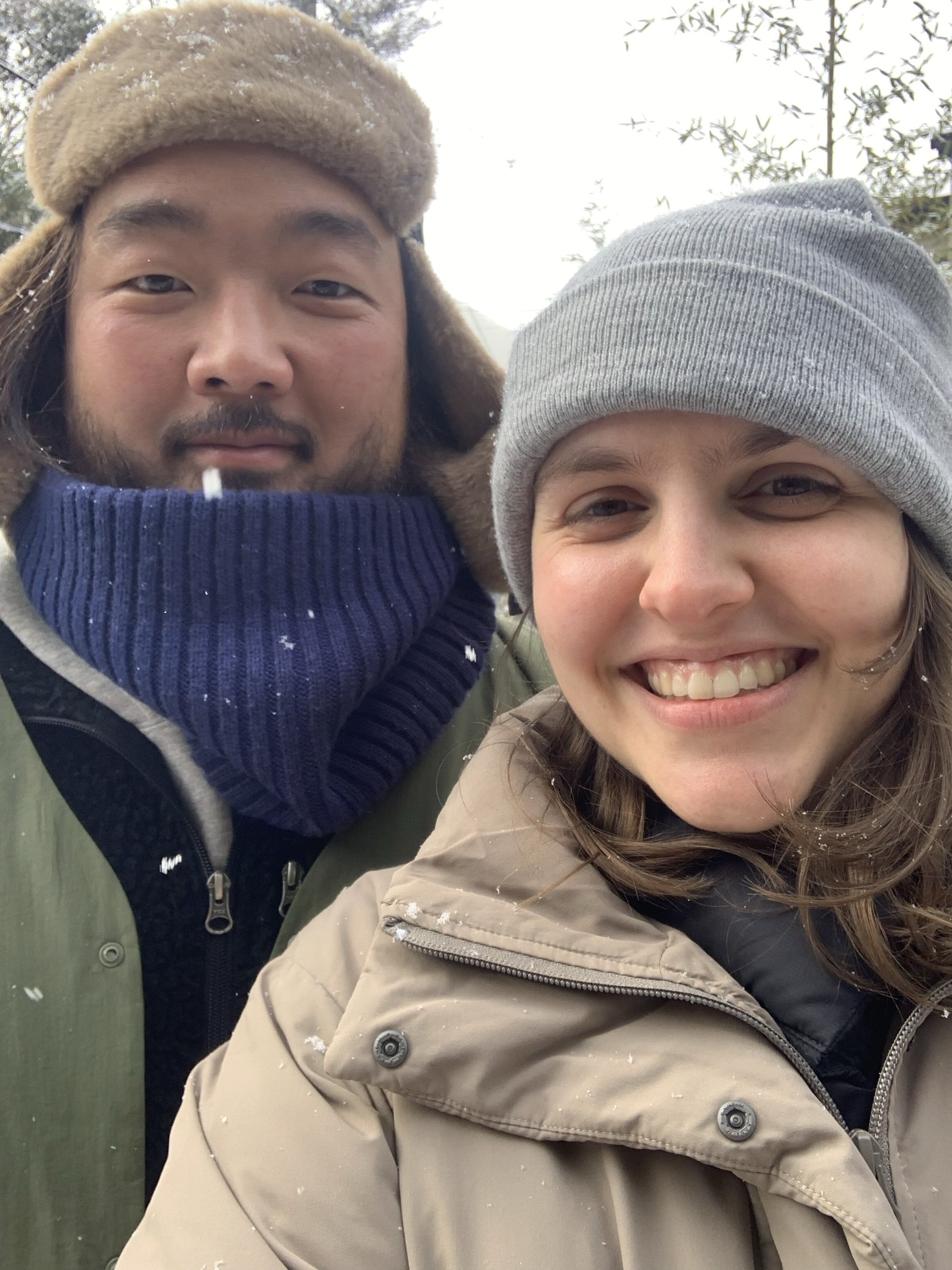
I arrived in 2022, in late spring where the weather was warm, and mild and the earth was decorated with flowers. Summer presented herself in planting rice saplings and flooding the fields. Days were filled with a chorus of cicadas and at night, one of frogs. Autumn brought red spider lilies, rice harvest and delicate maple leaves. Finally, the North Wind blew winter in, dried the empty fields and quieted the forests. Yet in February, the plum blossoms raised their pink and purple heads beneath snowfall, showing that spring would return. At the beginning, it was hard to convince myself that moving here was my decision as much as it was my husband’s. I sometimes felt like I had given up parts of myself or life to live here but, I knew that it was just the culture shock and homesickness talking. I had to remind myself that I wanted to be here of my own volition and that perhaps, whether I knew my husband or not, I would still have journeyed here.
Short on time? Here’s the cheat sheet:
💭 Rural Ikeda is quiet mountain farmland in northern Osaka Prefecture: rice fields, deer and four very distinct seasons. From our farm, the nearest station is a forty-minute walk.
🛂 I came on a spouse visa, and our Certificate of Eligibility took about two months. A certificate is now valid for three months, so your visa and your arrival in Japan both have to fit inside that window. Renewals can be filed at your regional immigration bureau or online, and from 1 October 2026 the fee depends on how long your permit is for.
🏠 Old akiya-style houses are cheap to rent but uninsulated, freezing in winter and hot in summer.
🚲 Without a car you’ll want an electric bike (dendo chari) and a budget for buses and trains.
📚 Ask at your city hall about free volunteer Japanese classes. Osaka Prefecture’s free textbook even teaches some Kansai-ben.
🏥 Unless you are covered through an employer, or as the dependent spouse of an employee, you will pay into national health insurance and, from age 20 to 59, national pension. Keep every receipt.
🤝 Out here, community means heading into the city for meetups built around what you love.


The Spouse Visa
Before I could set foot on my husband’s family farm, though, I had another wait at the airport to receive my residence card. At that time, I couldn’t speak a word of Japanese and thus relied on my husband to do the talking. I remember having to take a photo for my residence card (or zairyu cardo as it is called in Japanese). That ID photo of me consisted of the dark circles of someone who hadn’t slept for 24 hours, greasy hair from the lack of shower and the eyebrows of confusion. I’d thought this zairyu cardo wouldn’t be used much but little did I realize, I’d use it whenever I had to travel, apply for a job, open a bank account or anytime a police officer asks for identification (Japanese police are legally allowed to stop and ask you questions on the street. You are allowed to refuse questions but you cannot refuse to show your residency card - make sure to have it on you at all times).
Thankfully, I only had to endure this unflattering picture for a year as Japanese ID photo booths offer a beautifying option (for an extra fee, of course). (Editor’s note: immigration photo rules reject retouched photos, so choose the standard option for your residence card application.) After the first year of my spousal visa, I had to apply again. For me, this required a trip to the Osaka Immigration Bureau twice. First, to submit the visa extension (an application to extend your period of stay) and then to pick it up. You’ll receive a postcard in the mail once your visa is ready for pick up. For me, it is usually around 2 months. You pay for a revenue stamp at the post office (the postal worker said ‘¥4,000? This is the most expensive stamp I’ve seen in my sixty years of life’) and head back to the Immigration Bureau with this and your passport. The wait is long but one does feel a sense of camaraderie with all the others sitting on cold, metal benches.
On a note about zairyu cardos: if you’re getting married and are planning to double barrel your surname and have a middle name, my suggestion is: don’t double barrel the surname. Filling in government and doctors’ forms is exhausting - you have to write out your full name on the zairyu cardo and usually, the spaces for one’s name is way too small for mine. Every doctor’s office, bank appointment, or interview I wait, I hear: ‘HAYTON TANISAKI ROBYN LEIGH SAN’ shouted loudly. All heads turn to me to witness the person with the long name stand up.
Editor’s note: The ¥4,000 revenue stamp Robyn paid was the renewal fee at the time. It rose to ¥6,000 in April 2025, and from 1 October 2026 the fee depends on the length of stay you are granted. For the periods a spouse visa is issued for, that is ¥18,000 for six months, ¥33,000 for one year, ¥64,000 for three years and ¥75,000 for five years at the counter, and a little less if you apply online. Check the Immigration Services Agency’s fee guide before you apply.
Editor’s note: Robyn waited three months for her first visa during the pandemic, when Certificates of Eligibility were given longer validity, so a wait that long still fitted inside hers. Today a certificate is valid for three months, Japanese embassies usually issue the visa itself in about five working days, and your visa and your arrival in Japan both have to fall inside that window. Two legal steps worth knowing: register at your local city office within 14 days of moving into your home in Japan, and file your renewal in the three months before your current permit expires.
Safety
It is hard to compare little old Ikeda to Cape Town, my home town and a city considered to have an extremely high crime rate. When it comes to a safety competition between these two, of course, quiet Ikeda will win. Crime is very rare here. I was shocked to see children walking by themselves to school or young women walking alone at night when I first arrived. Now, it is a welcome sight I am used to. Despite the low crime rate, there are a few things I would keep in mind before jumping into Japanese country living.
Mountain roads and farm areas are not as well-lit as cities at night. Although it is rather safe to walk around at night, lack of lighting can make getting home a bit of a challenge (especially after a night out in Osaka city). Many small streams of water are left uncovered on the side of mountain roads to assist with rainfall runoff and rice irrigation. In Shintoism, one of Japan’s main religions, flowing water is said to be a sacred pathway for water deities and covering an open tributary is thought to bring about misfortune. In the dark and not knowing one’s way around, a lack of lighting and these open streams can be a recipe for wet feet and a couple of scratches or broken bones if you are unlucky.
Ikeda and its surrounding municipalities are relatively safe from tsunamis, being inland, though like everywhere in Japan, earthquakes do happen here (the 2018 Northern Osaka earthquake was felt strongly in Ikeda). However, heavy rainfall can bring about many flood and landslide warnings, especially if one lives up in the mountainside or close to the Inagawa river. Although I have not personally experienced any landslides or floods, the Ikeda region has a history of landslides and flooding in these regions. Luckily, structural reforms have made these risks a lot lower.
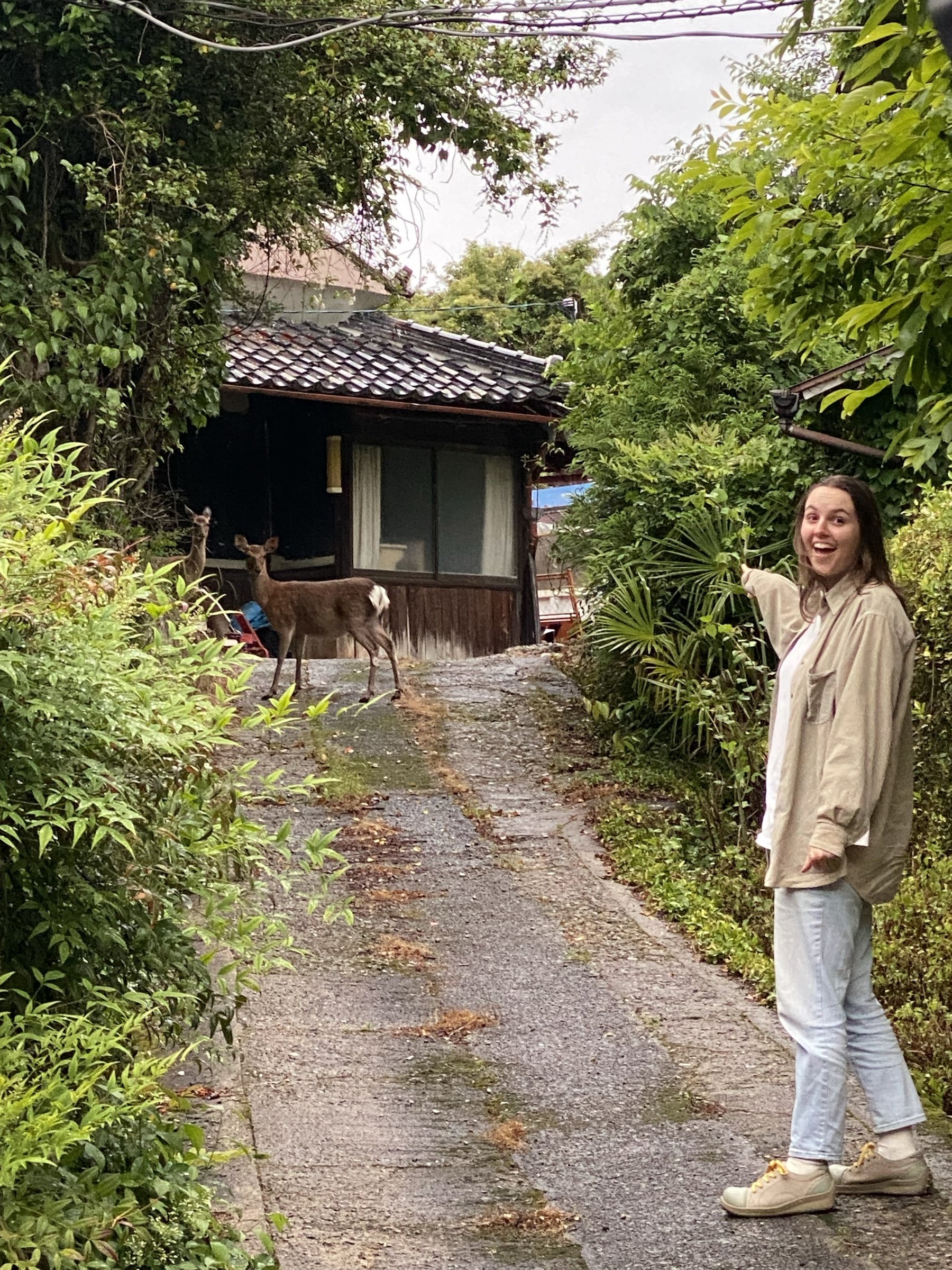
Ikeda’s Satsukiyama mountain (part of the Hokusetsu mountains in Northern Osaka) is lush with natural forests, offering wonderful short hikes and walks to its residents. Most of the forest remains untouched which means that it is a home to wildlife. Wildlife here ranges from nuisance to actual danger. Although most animals you may encounter on a hike or walks here are shy and are quick to flee, a few can be aggressive. The main animal to stay alert for on a hike or around forested areas is the inoshishi, or Japanese wild boar. Their small stature and white whiskers makes them appear like a harmless, old forest guardian but be warned… These animals are fast and aggressive. They are able to knock one down and use their tusks to attack and fatally injure. Mothers can often be more aggressive in the spring, protecting their adorable newborns (known as uribou). Snakes are another creature you should keep your eyes peeled for. Mamushi (or Japanese pit viper) is one of the most venomous snakes in Japan, alongside Okinawa’s Habu. Mamushi are clever, pit vipers that ambush prey by camouflaging themselves under leaves, soil and rocks. Their brown and grey colouring can make them difficult to spot. Farmlands are a hotspot for these snakes as their favourite prey – birds, lizards and mice- are in abundance. A bite from this snake requires an immediate hospital visit and a week of treatment. Delaying urgent care could be fatal! Megan Thee Stallion was right to choose this feared and respected creature as the title for her hit single.
Language
I’ve heard that it is a fact that Japanese is one of the hardest languages to learn as an English speaker. Don’t let this make you give up hope! Language learning is a tough journey, but it doesn’t have to be a painful struggle with textbooks and apps that seem to get you nowhere (Mr Duo, I’m looking at you).
If you are planning to spend a long time in Japan or settle down here, it is best for you to learn enough to be able to get around. For example, hiragana, katakana and some kanji are quite important as well as everyday phrases that can help you out ordering food, asking for help, train station announcements or emergency warnings. This may sound daunting, but once you know enough Japanese to feel confident navigating daily tasks, you’ll find life in Japan becoming much easier.
Many of Osaka’s municipalities offer free, volunteer-based Japanese classes. By visiting your local city hall, you can find out if your city offers these classes or if there is an affordable option. Osaka prefecture has a free textbook for most of these volunteer run classes. The textbook (called Kiite, Manete, Hanashite in hiragana - literally Listen, Repeat, Speak) teaches you the basics (about N5 to N4 Japanese) which is helpful for everyday life. I used this textbook with my volunteer teacher, and it took my basic greetings and hiragana to being able to get about confidently without stressing my mother-in-law. This textbook also teaches you some of the Kansai-ben (the dialect used in the Kinki region) which is very useful if you plan to live here. Nothing makes an Osakan crack up more than a foreigner saying, “nandeyanen” (‘what are you talking about?!’). Trust me, throwing around some Kansai-ben in Osaka will make you friends pretty quickly!
Japanese has been surprisingly fun for me. I have learnt to be less afraid of making mistakes and to laugh at myself. I often enjoy telling friends and family members about silly incidents of misunderstandings where my language mistake ends up being the punchline. My advice is: loosen up, throw around your basic phrases, use words and grammar you’ve just learnt, repeat yourself, write the kanji messily and keep a curious mind. You’ll learn quicker than you think.
The Downside
Japan is world renowned for its public transport system: subways, surface and elevated railways and, to top it all off, the bullet train that connects one to most of Japan at rapid speeds. Living in a Japanese city often means that your nearest station is five to fifteen minutes walk and will likely lead you to a major station or line. Living in the rural side, however, not so much… For me, my closest station is around a forty-minute walk over a small mountain. The station is also a small, local stop which requires a few transfers to get to Umeda. If you aren’t planning any trips into the big city often, you may not worry but for daily errands such as grocery shopping, going to the doctor or pharmacy, this becomes inconvenient. You’ll definitely need a car or a bicycle, or better an electric bike (a dendo chari as it is called here) to make your day-to-day tasks a little easier.
Perhaps you’ve seen the old Japanese house (akiya) lifestyle vlogs or transformations on YouTube and feel inspired to take the plunge and live in one of them. These old houses can be beautiful with their tatami flooring, wood panelling and sliding doors. In the spring and autumn, our home is perfect – a window open offers a gentle breeze and the tatami flooring is just right to rest on. Yet come winter and summer, this all changes. Most old houses in Japan do not have insulation and have very thin walls and windows (if you are living further north, however, walls and windows thicken). Up in the mountains, winters get cold with snow and in the summer, one is battered with the never-ending heat and humidity until October. I often find that my house is colder than the outside in winter and hotter than the outside in summer. Air conditioners and heaters become my closest friends, only to stab me in the back once a month when the electricity bill arrives. Most pipes in old Japanese homes are exposed outside. Every winter, our pipes freeze which makes laundry and taking a bath impossible. Due to the nature of the house (and most homes), it is often easier to rebuild the house completely instead of making piping and wiring modifications. And in the summer, the bugs get in through tiny cracks and spaces in these thin walls… mosquitoes, cockroaches, centipedes, wasps, stinkbugs and house centipedes love to crawl in here in the summer. It’s a pain (and sometimes dangerous with centipedes and wasps) but I have learnt to accept that with gorgeous greenery comes creepy crawlies.
Another downside presented itself in diet. I was a vegan for three years in South Africa (vegetarian for four) and I had wanted to continue my lifestyle choice. However, it was made clear to me by my husband and his family that veganism was not something that they believed would be possible in Japan. Meat is very big in Japan and Osaka, known as the nation’s kitchen, has many local dishes containing meat of all kinds. It was important for me to embrace my husband’s culture, yet I was hesitant to stop a lifestyle choice that I had been accustomed to for so long. I ended up making a compromise: I would eat fish and eggs. Although it may seem like a very small thing for some, it was a big step for me. Japan, despite currently being one of the largest tourist hot spots, is still behind when it comes to different diets. My sister who travelled here with a gluten and dairy allergy struggled to find places suitable for her to eat. The safest places were chain restaurants that offered allergy suitable meals. I knew she felt that she’d disappointed my husband’s family by not being able to eat many of the local dishes. A few friends I’ve made here are Muslim and are sometimes unable to eat at restaurants due to them not meeting Halal requirements. Many dishes contain dashi (fish stock) or meat extracts which aren’t always considered ‘meat’. This can be difficult to navigate, especially if you have allergies or dietary restrictions. The best way to navigate this is to research as much as possible before you travel or go out. I often always look at the menu of a restaurant before going out with friends to know what is available to us. Recently, my friends and I have chosen to have dinner parties where we each bring a dish from our own country or one that fits everyone’s dietary requirements.
Cost of Living
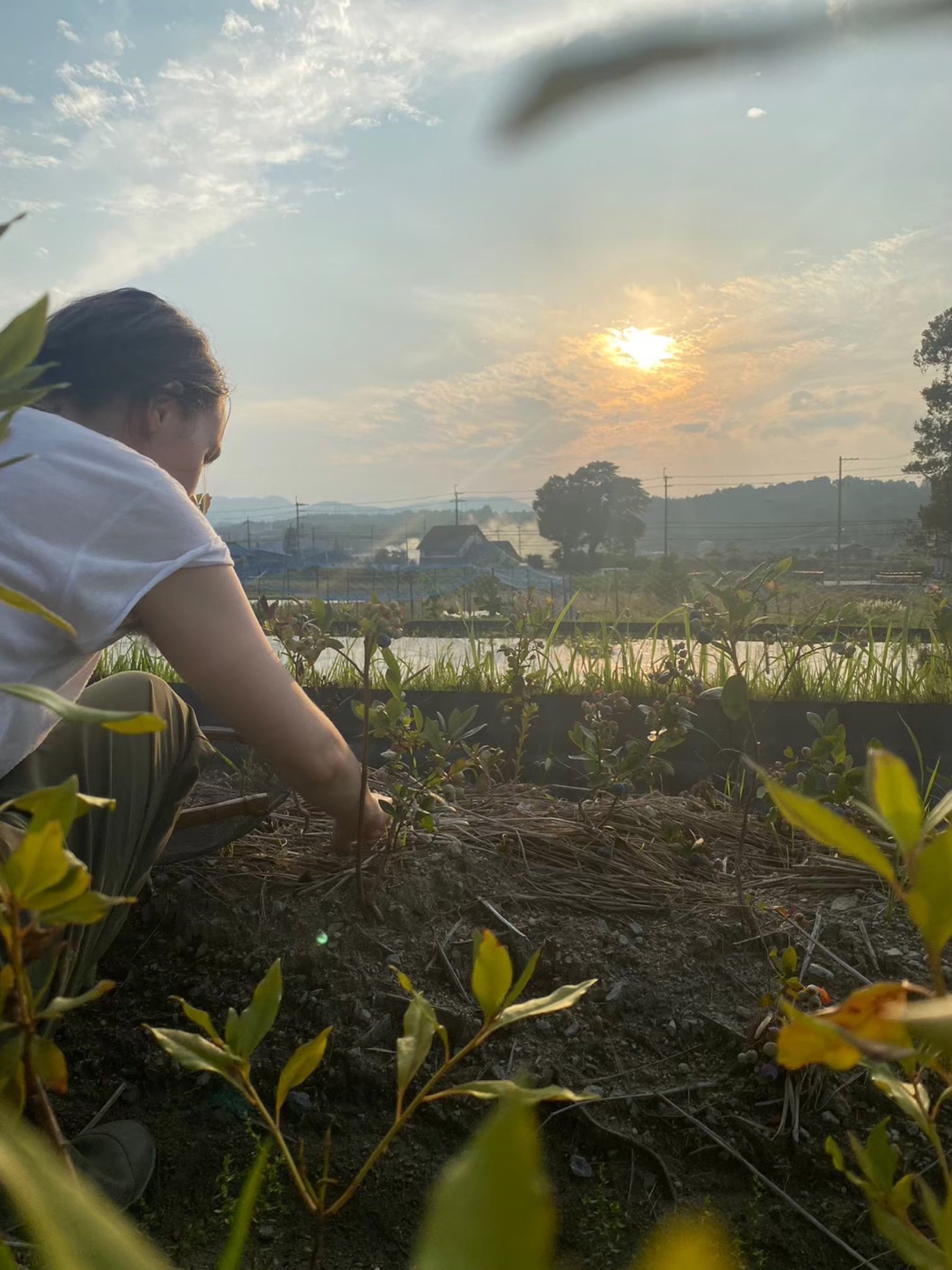
For tourists, Japan is an affordable wonderland yet for those living here, the rising inflation and stagnant wages has been presenting problems. Of course, everyone’s situation is different. For me, I live in a two-income household with no children. Our rent is relatively cheap at ¥40,000 a month. Akiya homes tend to be a lot cheaper for rent but of course, as previously mentioned, there are disadvantages. Groceries per month for two of us round up to ¥60,000 (and this excludes rice which we grow ourselves). If the deer and inoshishi have not been up to their thievery, we are able to eat our own home-grown seasonal vegetables and fruits. I don’t have a car and don’t live in the city so I have to make use of public transport (buses, trains and subways usually) to get to work, visit friends or go about my daily tasks which adds up to around ¥25,000 a month. Electricity bills vary seasonally. Our last summer bill was ¥13,000 whereas our February bill was a shocking ¥16,000. Yet the milder spring and autumn months give us a bit of a break. Gas and water tend to be ¥7,000 and ¥5,000 a month respectively. This may sound low but, every resident in Japan - foreign or Japanese - has to pay for resident tax, pension and health insurance. National pension (if one is not paying through a company) is ¥17,920 a month (FY2026), health insurance (again, if you are self-employed) is around ¥18,000 a month and then finally, resident tax for Ikeda City, Osaka is around 10% of the previous year’s taxable income. Keeping track of it all is a nightmare and most of the time, it’s all on paper. Once, I had lost a receipt that stated I had paid for my pension and due to not mailing it in, I had to pay ¥53,000 (three months’ worth) again - ¥106,000 gone due to my carelessness. Japan is a place where Type A personalities can thrive.
Editor’s note: national pension applies from age 20 to 59. If your spouse is a company employee in their employer’s pension scheme, you can usually be registered as their dependant and pay no contributions of your own. It is not automatic, though: ask your spouse’s employer to register you within 14 days of arriving or marrying (a separate step from registering your address). A late registration is only backdated for up to two years. National health insurance is based on your income plus flat charges, so yours will differ. If you ever do pay the same months twice, the Japan Pension Service refunds the duplicate once it spots it: it posts you a refund claim form to fill in and return, and the right to a refund lapses after two years.
Finding Community
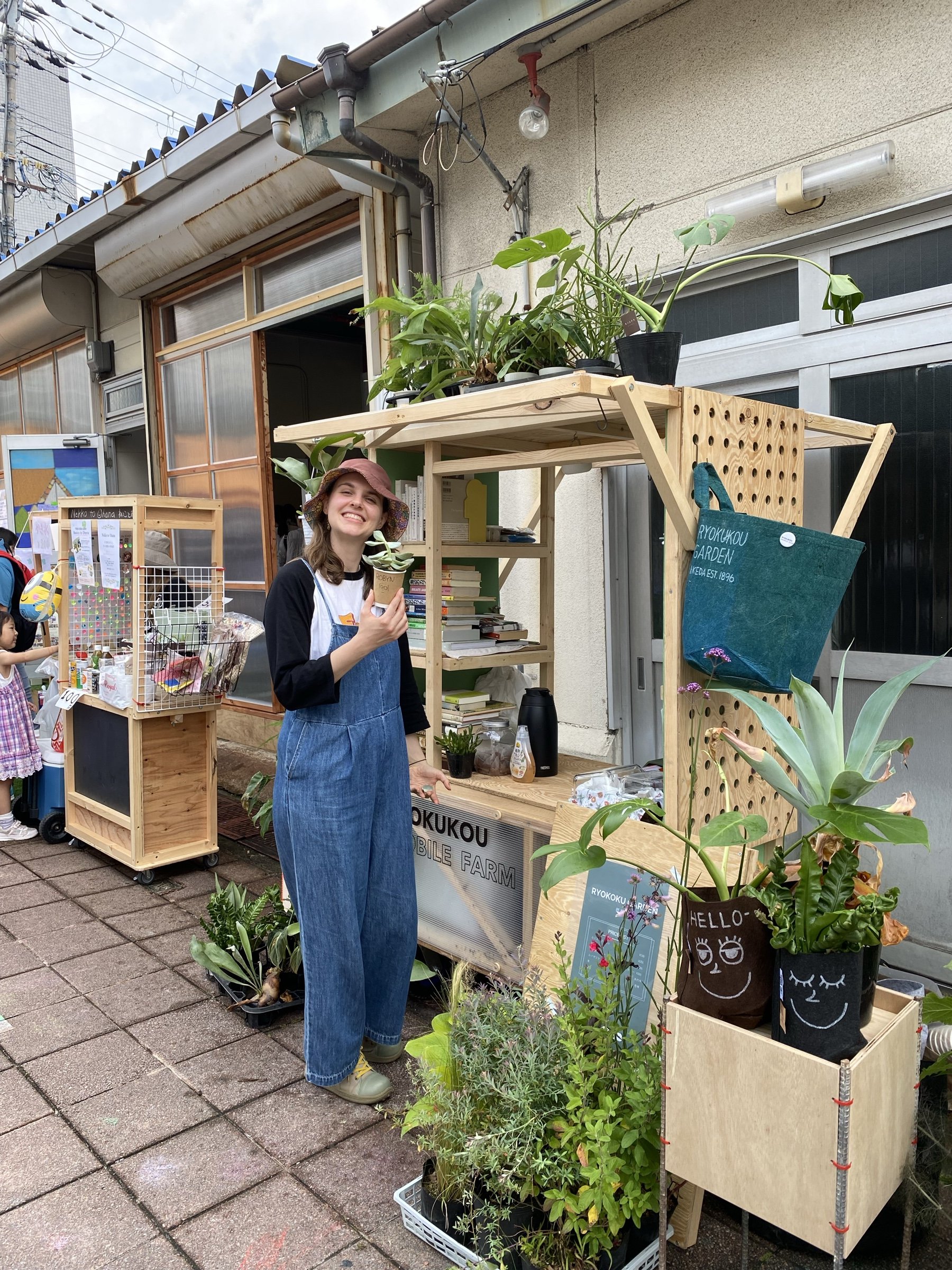
At the beginning, I enjoyed my isolated rural life – living with trees and plants, only coming down from the mountain to get groceries. Yet, this isolated life with trees was not perfect. I needed community. These suburban and rural sides of Japan can present a challenge when looking to meet other foreigners. The best way, I have found, to meet people is by making a trip into the city and joining meet up events for things you are interested in. For me, I love to read and practice yoga. For my reading interests, I joined Osaka Book Swap (@osakabookswap on Instagram) for a few meet up events and loved it. I even made some of my best friends in Japan here. The event is free to join! As for my yoga interest, I took part in Ito’s temple yoga classes (@ito_japan on Instagram). The classes are open to everyone: experienced yogis to curious first-timers, Japanese people to immigrants to tourists. I attended quite a bit and became friends with the two creators. After attending many classes, I received some discounts as a member and the creators (Hiyori and Nanami) even asked me to sub a few classes! Both Ito and the Osaka Book Swap gave me opportunities to meet people and made coming down from my mountain hermitage worth it.
Looking Forward
Quiet life in the mountains brought about many challenges yet, I have adapted and learnt to overcome them in my own, slow way. The hurdle of Japanese still presents itself on the odd occasion, but I am quite comfortable to get around and have friendships in my official second language. My house is freezing in the winter and scorching in the summer, and I still love it because it is the home my husband and I have made together. At home, I cook and eat vegetarian, or vegan if I can, and when I go out or eat at my in-laws, I have some fish. I have made wonderful friends here, friends that have plans to move on and friends that have settled here too. I socialize at yoga or book swap meet ups. I have no regrets leaving and I no longer feel that I ‘followed’ my husband or changed my life for him. I won’t deny that it has been difficult to be on the other side of the world from my family. It was especially hard when I lost my grandmother whom I had a close relationship with. Yet my husband and his family offered the same support and kindness that I would have received back in South Africa. There are many things I would like to achieve here. A change of scenery and culture has opened up my mind and taught me things about myself. My time in Japan is not over yet. For the first time in a long time, I am more hopeful and excited for where my future takes me.

.png)
.png)


